
Stalen
Beschikbaar voor actieve projecten zodra de oppervlakterichting helder is.

Architecten & Ontwerpers
Een beknopte werkroute voor stalen, afwerkingsrichting, doorlooptijden, plaatsingsnota's en onderhoud.
Vlaamse Tegelmeesters werkt het best wanneer materiaalkeuzes vroeg worden besproken: oppervlak, toepassing, hoeveelheid, randkarakter, glazuurrichting en het ritme dat het project vraagt.
Het werk is handgemaakt en kleinschalig. Het trade-proces maakt die variatie duidelijk vóór specificatie, bestelling of plaatsing.
Stalen
Beschikbaar voor actieve projecten zodra de oppervlakterichting helder is.
Doorlooptijd
Bespreek grotere opdrachten en maatglazuren minstens 8 weken vooraf.
Jaarvolume
Ongeveer 600 m² tegels per jaar.
Droging / Stook
Gedroogd tussen stukken hout vóór biscuit op 1080°C en glazuurstook op 1180°C.
Afwerking
Vlak, geglazuurd, reliëf en geselecteerde maatglazuren.
Gebruik
Interieurwanden, natte zones na projectreview, buitengebruik op aanvraag.
Werkprotocol
Het doel is niet om een cataloguskeuze af te dwingen. Het doel is onzekerheid te verminderen vóór het oppervlak op de werf komt.
Deel ruimte, oppervlakte, natte of droge context, visuele richting, timing en of het oppervlak moet aansluiten bij steen, hout, pleister of metaal.
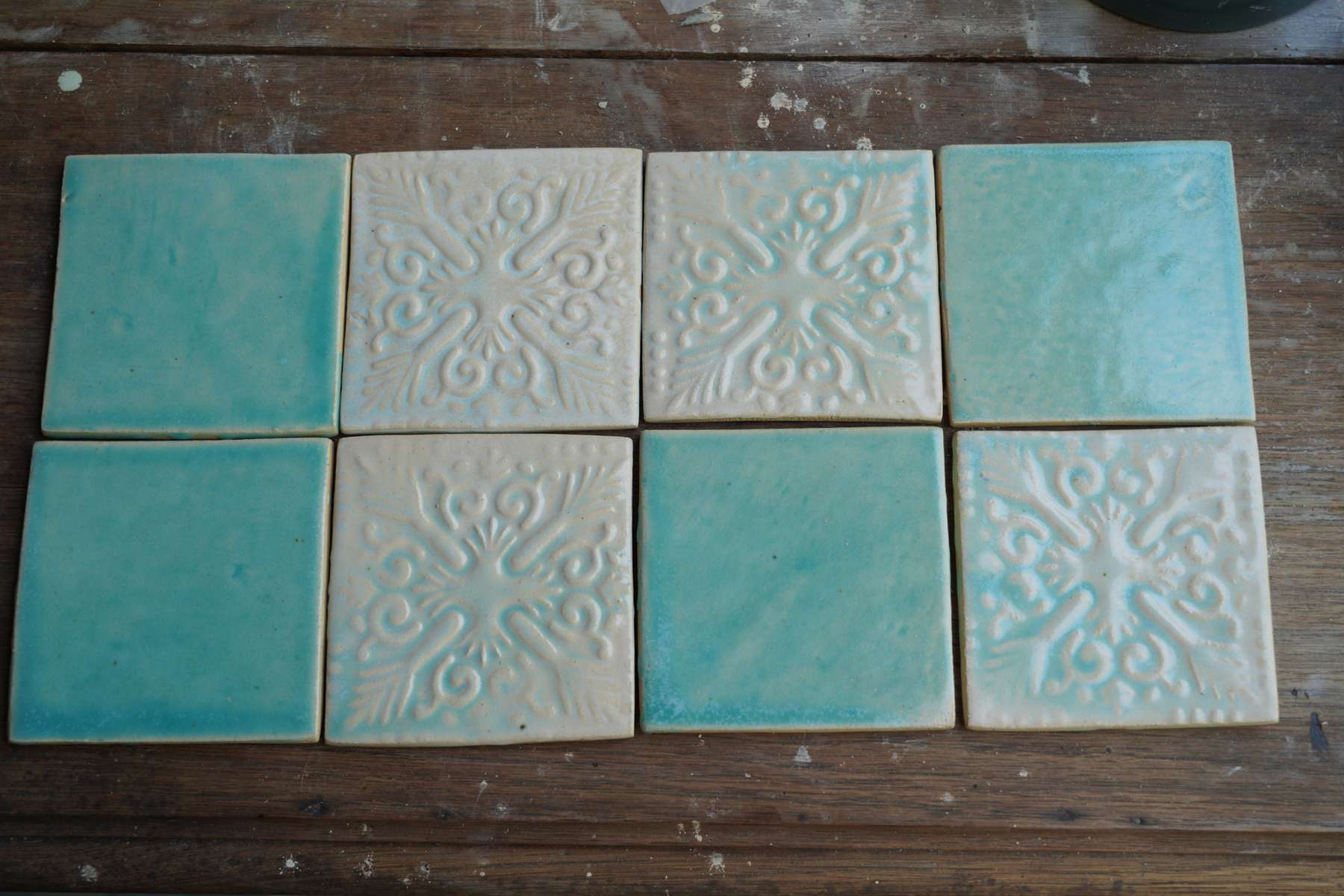
Stalen zijn projectinstrumenten, geen generieke swatches. Ze tonen glazuurfamilie, toon, reliëf en beweging; de uiteindelijke batch behoudt variatie.
Hoeveelheid, afwerkingsrichting, verwachte doorlooptijd, levering en eventuele reservatiebetaling worden bevestigd voordat werk wordt voorbehouden of geproduceerd.
Plaatsing blijft de verantwoordelijkheid van de aangestelde plaatser. Ondergrond, waterdichting, lijm, voeg, bewegingsvoegen en geschiktheid ter plaatse moeten lokaal worden bevestigd.
Specificatienota's
Stalen kunnen worden geleverd voor actieve projecten nadat de gewenste oppervlaktefamilie bepaald is. Ze zijn representatief, geen garantie op identieke toon of glazuurbeweging.
Voorbereide biscuitvoorraad kan de timing verkorten wanneer beschikbaar. Grotere opdrachten, reliëf of maatglazuren worden best minstens 8 weken vooraf besproken; complexe opdrachten kunnen langer vragen.
De jaarproductie bedraagt ongeveer 600 m², waardoor het werk bewust beperkt blijft en verbonden is met atelierritme in plaats van industriële beschikbaarheid.
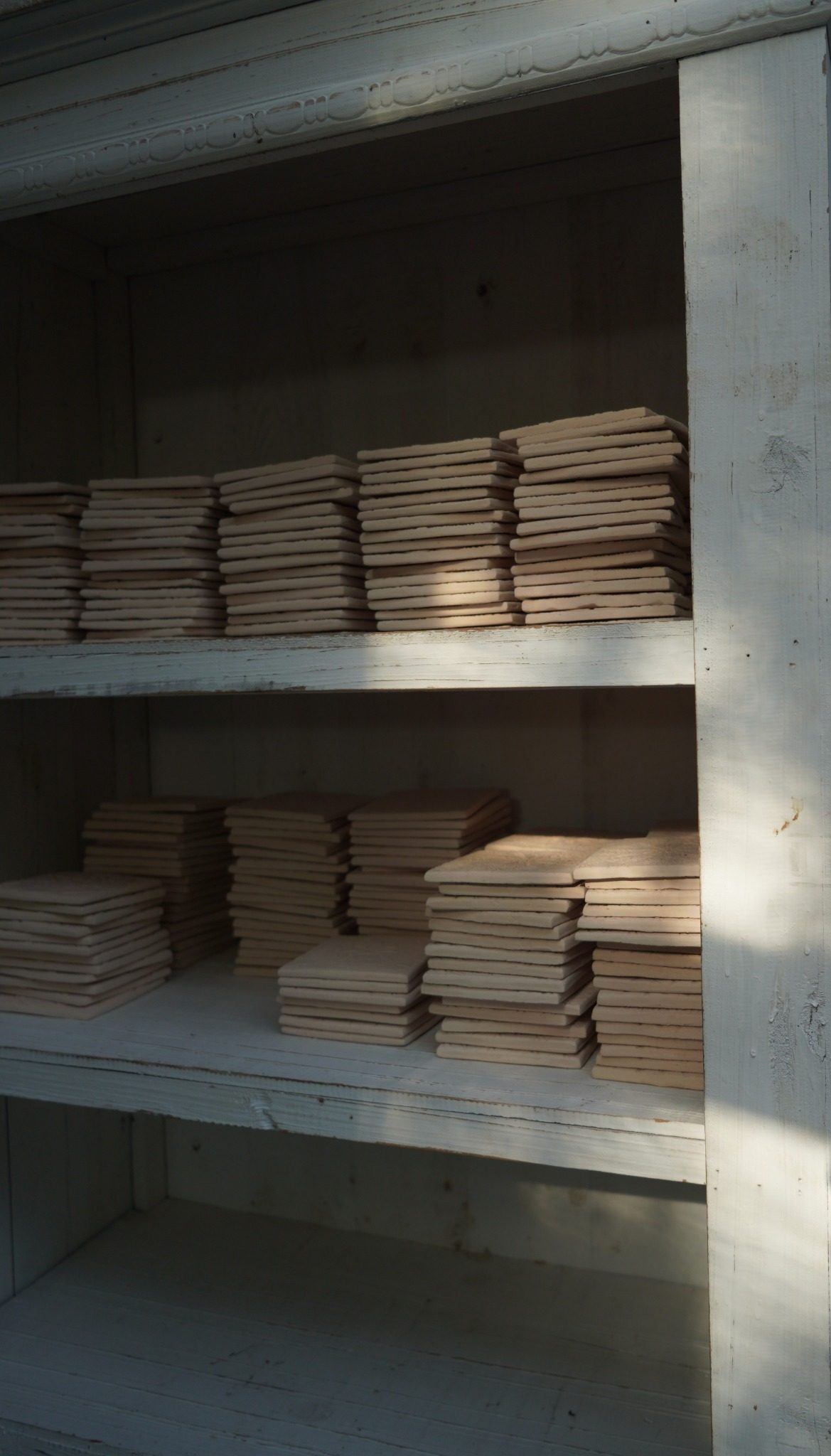
De tegels worden tussen stukken hout gedroogd, biscuit gebakken op 1080°C en glazuur gestookt op 1180°C. Batchtiming volgt droging, stookplanning en glazuurkeuze.
Vlak geglazuurde oppervlakken, geselecteerde reliëfs, glazuurfamilies en beheerste maatglazuren zijn bespreekbaar. Strikte fabrieksherhaling is niet het karakter van het werk.
Meng tegels uit de batch vóór plaatsing. Bevestig ondergrond, waterdichting, lijm, voeg, bewegingsvoegen en reinigingsmethode met de aangestelde plaatser.
Gebruik milde niet-schurende reiniging. Vermijd sterke zuren, sterke alkaliën, schuursponsen en hakende doeken op reliëf. Reliëf kan een zachte borstel vragen.
Natte binnenruimtes en buitenprojecten worden individueel bekeken. De uiteindelijke geschiktheid hangt af van plaatsing, context, klimaat en onderhoud.
Specificatieblad
Het blad geeft architecten en ontwerpers een snelle referentie voor materiaalkarakter, stalen, doorlooptijden, plaatsingsaandachtspunten en onderhoud.
Projectgesprek
Voor architecten en ontwerpers is het beste moment om contact op te nemen vóór hoeveelheden, voeglijnen en finale afwerkingen vastliggen.
Vroeg overleg laat stalen, batchplanning en afwerkingsrichting de architectuur ondersteunen in plaats van er laat op te reageren.
Start aanvraag